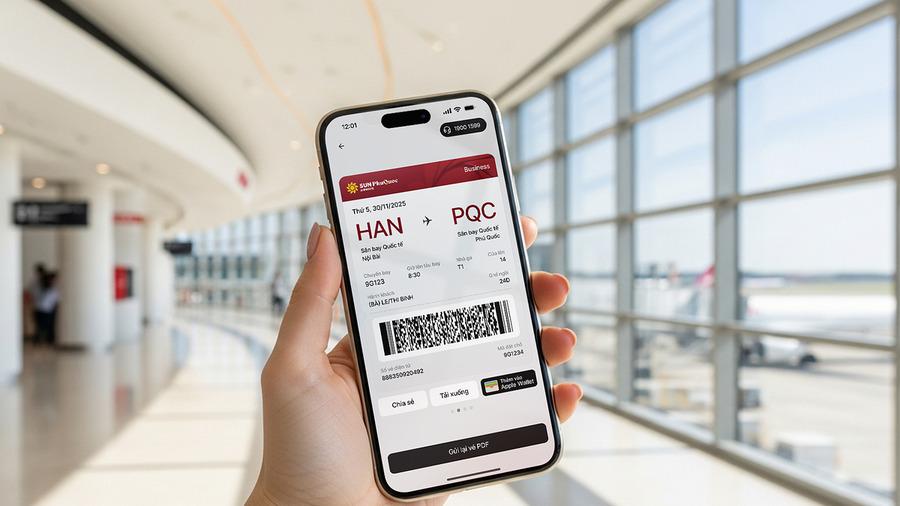

On an airplane, passengers may use phones and electronic devices, eat and drink, use the restroom, or adjust their seats in accordance with regulations. However, smoking, opening an emergency exit without authorization, tampering with safety equipment, or ignoring the instructions of the cabin crew are prohibited acts that may affect flight safety.
1. Things You Can Do on an Airplane
Under normal conditions, passengers may use phones and electronic devices in accordance with the airline's policies, eat and drink according to the onboard service, walk around when the seat belt sign is off, and use the restroom when permitted. Seats may also be reclined, but they must be returned to the upright position during periods when required by the cabin crew.
1.1. Use Phones, Headphones, and Laptops in Accordance with Regulations
Phones, tablets, laptops, and personal electronic devices are not automatically prohibited on airplanes. Their use depends on the airline's policy, the type of device, and the instructions of the cabin crew. ICAO also provides guidance on expanding the use of personal electronic devices during critical phases of flight.
Therefore, when boarding the aircraft, you should:
Switch your phone to airplane mode or follow the airline's instructions.
Only turn on wireless connections when permitted by the airline.
Stop using the device when instructed by the cabin crew.
During boarding, taxiing, takeoff, and landing, you should remove your headphones if wearing them makes it difficult to hear instructions from the cabin crew or ground staff. The Civil Aviation Authority of Vietnam particularly highlights this point.
Note: Do not assume that every flight applies the same rules to electronic devices. The airline's and cabin crew's instructions on the specific flight should be followed.
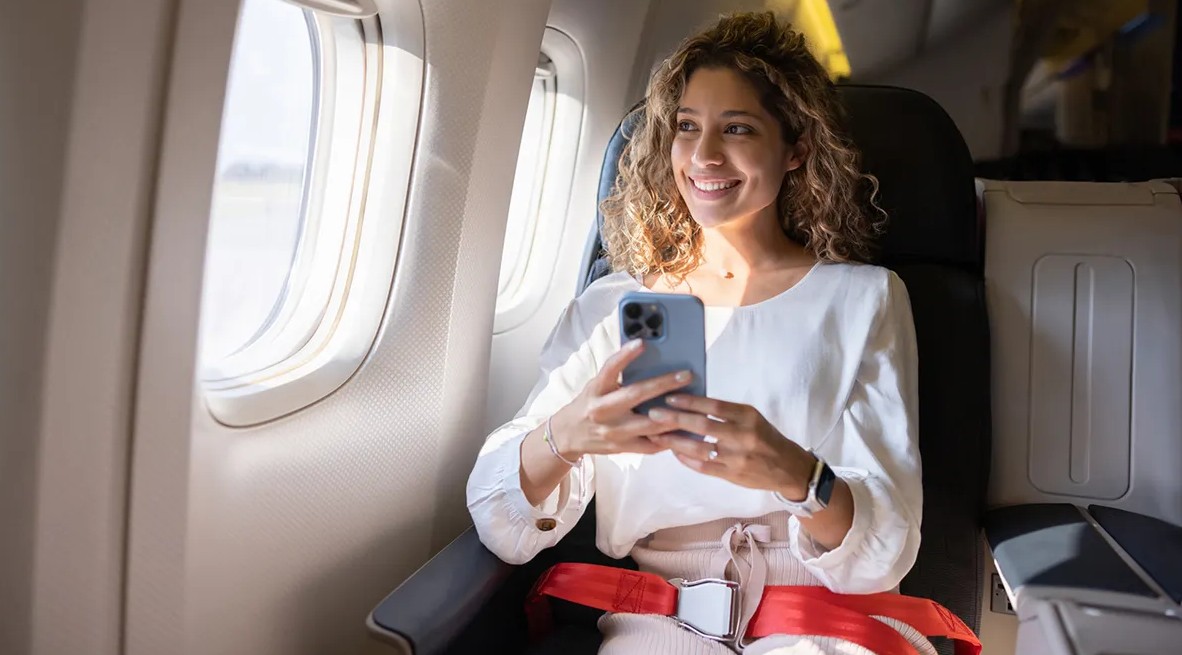
Passengers may use their phones on an airplane but must follow the airline's instructions
1.2. Eat and Drink in Accordance with Flight Regulations
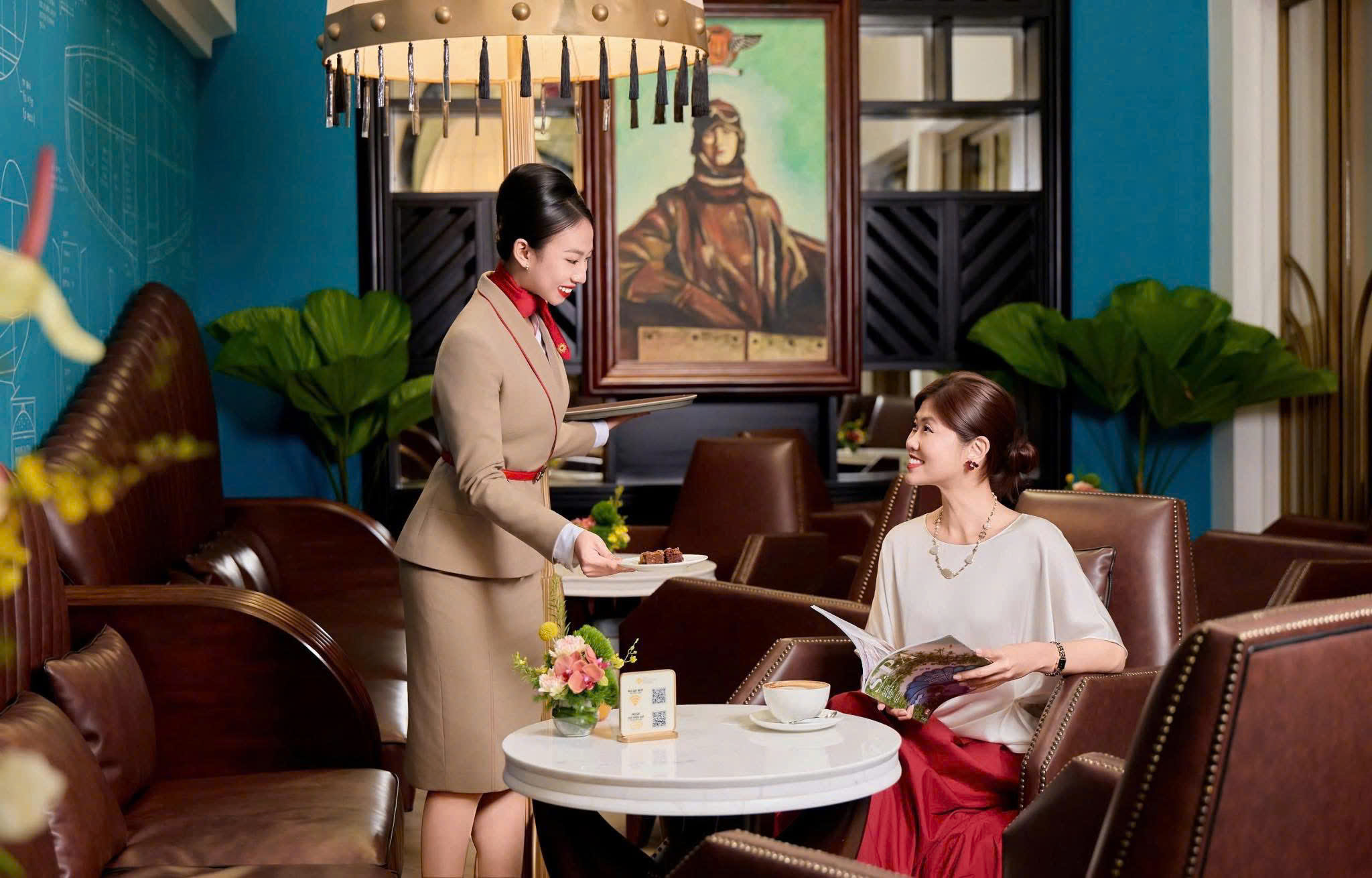
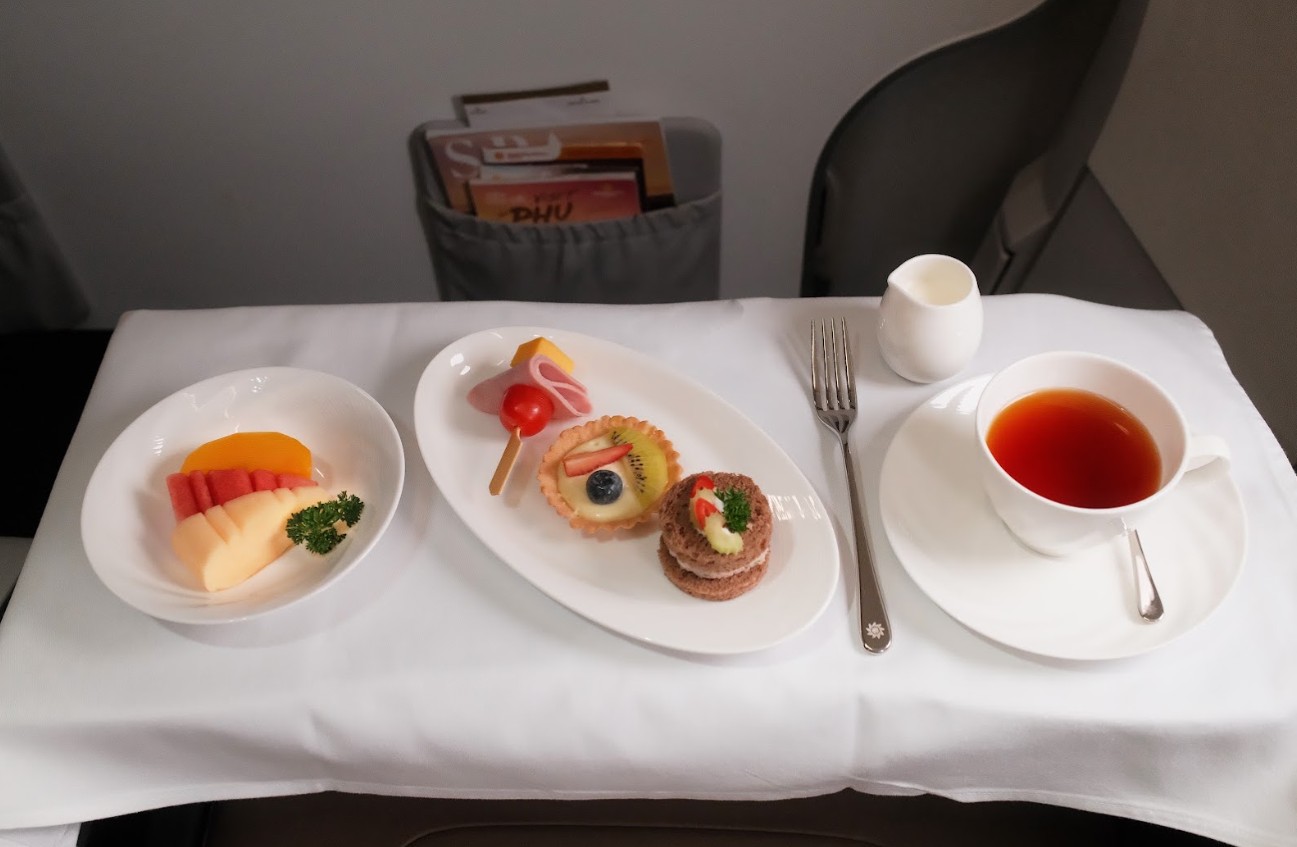
Passengers may eat and drink the food and beverages served on the flight as part of the airline's onboard service.
If you want to bring your own food or drinks onto the aircraft, check the airline's regulations and the rules regarding permitted items in advance. Not all food and beverages may be brought into the cabin or consumed freely during the flight.
In addition, you should keep the tray table and seating area tidy, especially when the cabin crew begins collecting trays or preparing for takeoff and landing.
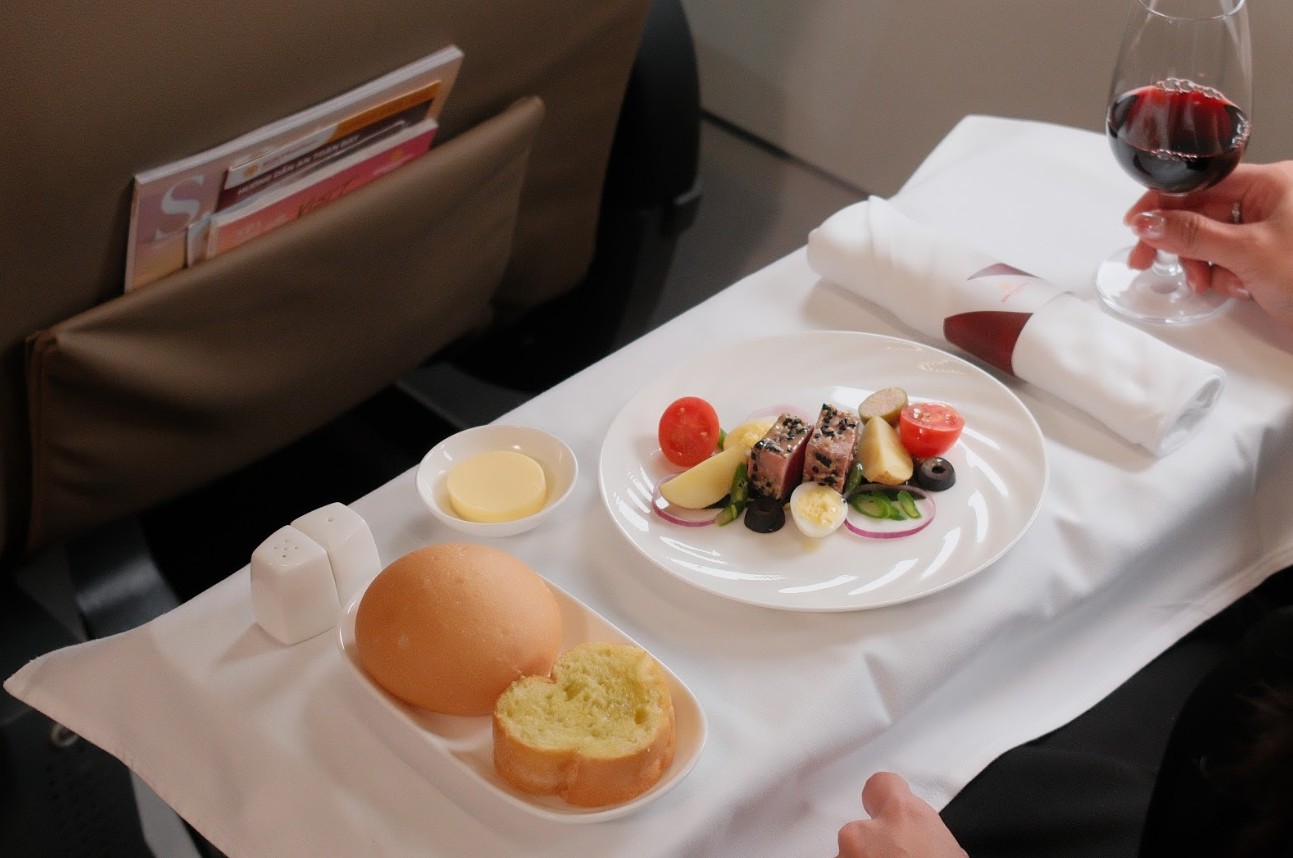
Passengers may eat and drink the food and beverages served on the flight
1.3. Walk Around and Use the Restroom When Permitted
You may stand up, walk around the cabin, or use the restroom when safety conditions allow.
However, when the seat belt sign is illuminated, passengers should return to their seats and fasten their seat belts as instructed. The Civil Aviation Authority of Vietnam recommends that passengers wear seat belts during taxiing, takeoff, landing, and whenever the seat belt sign is illuminated.
If you are standing in the aisle when the seat belt sign comes on, return to your seat instead of continuing to walk around.
1.4. Adjust the Seat Recline at the Appropriate Time
You may adjust your seat if it has a reclining function. However, you should not recline the seat when the cabin crew requires it to be returned to the upright position, particularly during takeoff and landing.
When reclining your seat during the flight, check behind you first. If the passenger behind you is eating, using a laptop, or needs working space, suddenly reclining your seat may cause inconvenience.
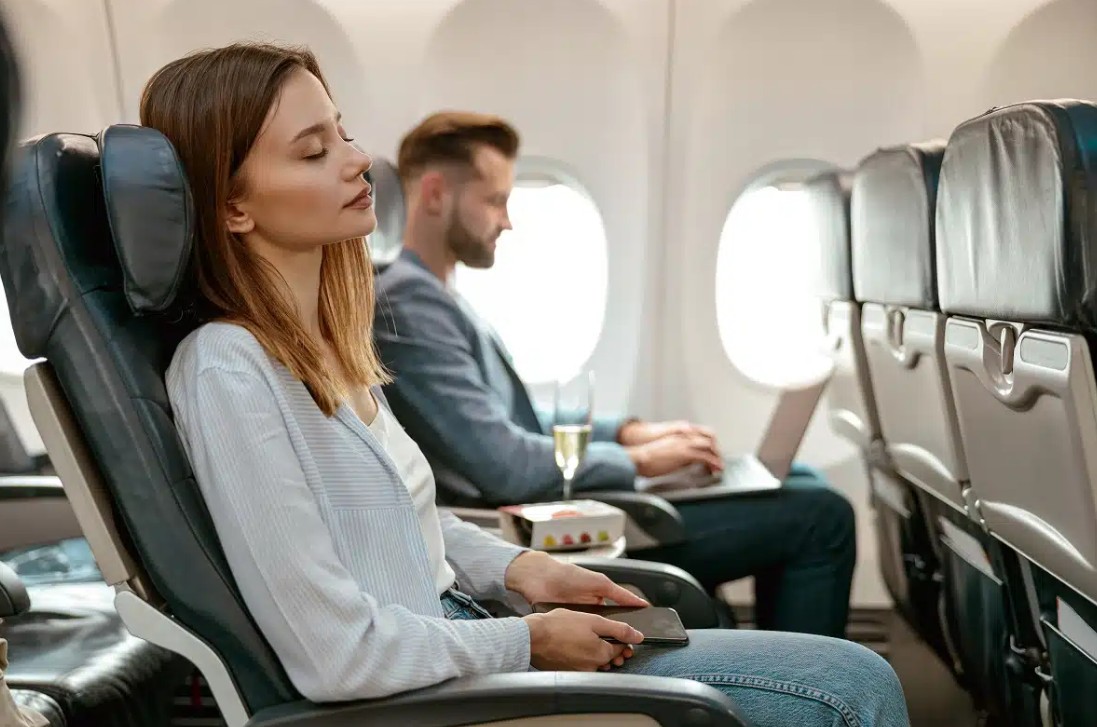
Passengers may adjust their airplane seats
2. Acts That Are Not Permitted on an Airplane
Certain acts directly related to aviation safety or order on board are not permitted. The Civil Aviation Authority of Vietnam states that passengers must comply with the instructions of the aircraft commander and cabin crew regarding safety, and measures may be taken to prevent acts that threaten safety, involve assault, or fail to comply with cabin crew instructions.
2.1. Smoking or Using Smoking Devices in the Cabin
Smoking on board an aircraft is prohibited. The Civil Aviation Authority of Vietnam also identifies aircraft as public transport vehicles where smoking is completely prohibited.
This regulation should not be understood as prohibiting only traditional cigarettes. IATA advises passengers not to smoke or vape in any area of the aircraft.
Passengers must not enter the restroom to smoke or tamper with smoke detection equipment. Deliberately disabling or interfering with safety equipment may result in more serious consequences than ordinary smoking.
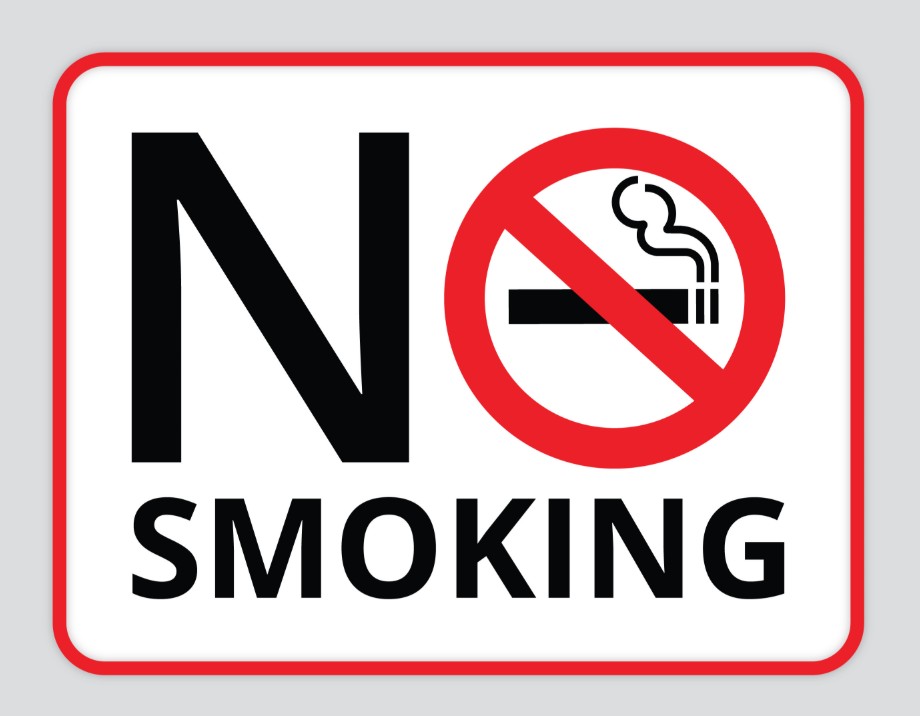
Passengers are not allowed to smoke on airplanes
2.2. Opening Doors or Tampering with Emergency Exits and Safety Equipment
Aircraft doors, emergency exits, oxygen masks, life jackets, fire extinguishers, and emergency equipment are not items to experiment with or play with.
Passengers must not:
Open or attempt to open aircraft doors.
Operate an emergency exit without instructions.
Remove, move, or use safety equipment for purposes other than its intended purpose.
Interfere with equipment, signs, or warning systems on the aircraft.
In an emergency, follow the instructions of the cabin crew. ICAO emphasizes that passengers' understanding of safety information and how to use equipment is important for handling emergency situations.
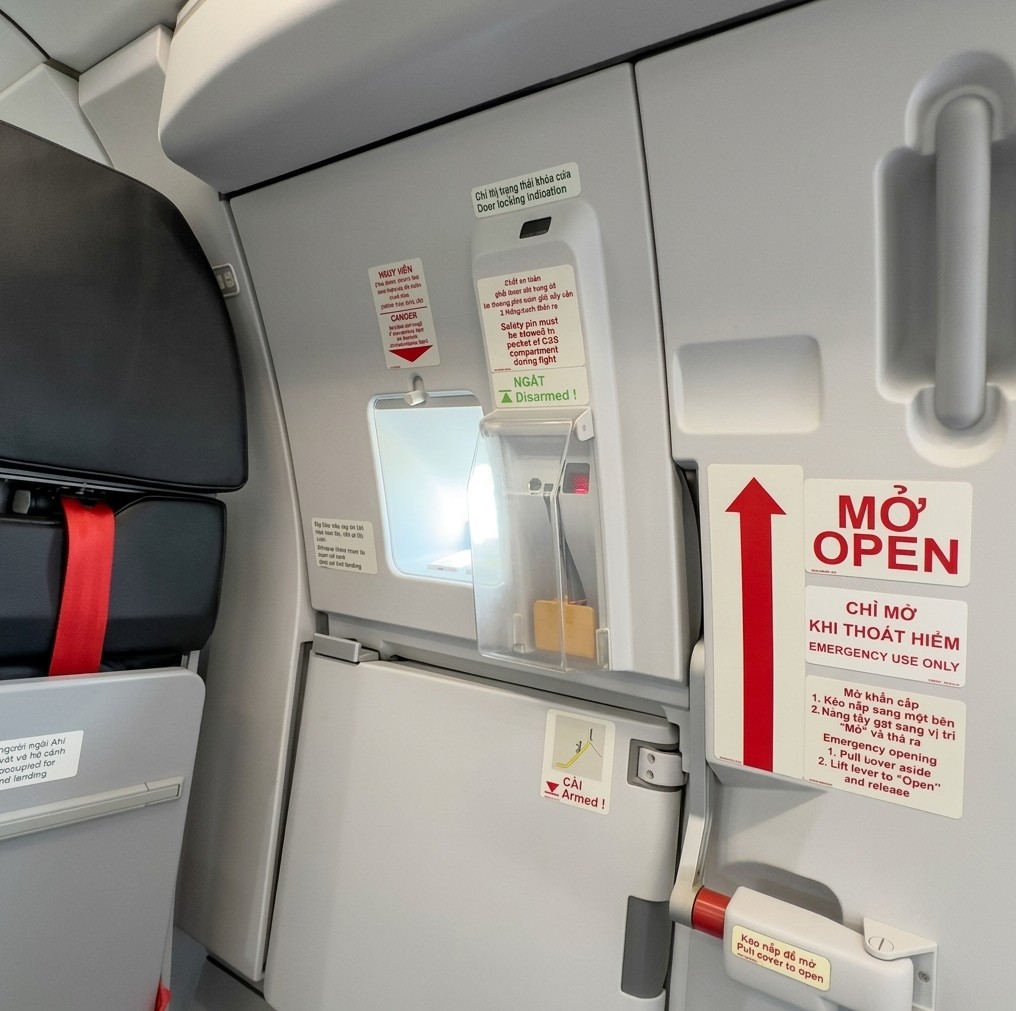
Do not open the emergency exit without instructions from the cabin crew
3. Things to Avoid for a More Convenient Flight
Not all of the following acts are prohibited by law. Some concern courtesy, hygiene, or the use of shared space. However, avoiding these behaviors will help reduce inconvenience for you, other passengers, and the cabin crew.
3.1. Disturbing or Affecting Other Passengers
The aircraft cabin is a shared space for an extended period. Therefore, you should avoid:
Talking too loudly.
Playing audio from your phone or laptop without using headphones.
Taking up too much shared space.
Blocking the aisle unnecessarily.
Changing seats without authorization or repeatedly disturbing others.
Disruptive or threatening behavior that affects the operation of the cabin crew may escalate from an issue of conduct to an aviation safety concern.
3.2. Ignoring the Safety Briefing Before the Flight
Even if you have flown many times, you should still pay attention to the safety briefing.
Each type of aircraft may have different emergency exit locations, equipment, and cabin layouts. The Civil Aviation Authority of Vietnam recommends that passengers read the safety information card and follow the cabin crew's safety briefing before each flight.
At a minimum, identify:
The nearest emergency exit.
How to fasten and release the seat belt.
The location of the safety information card.
The location and use of emergency equipment relevant to the flight.
3.3. Sitting in the Wrong Seat
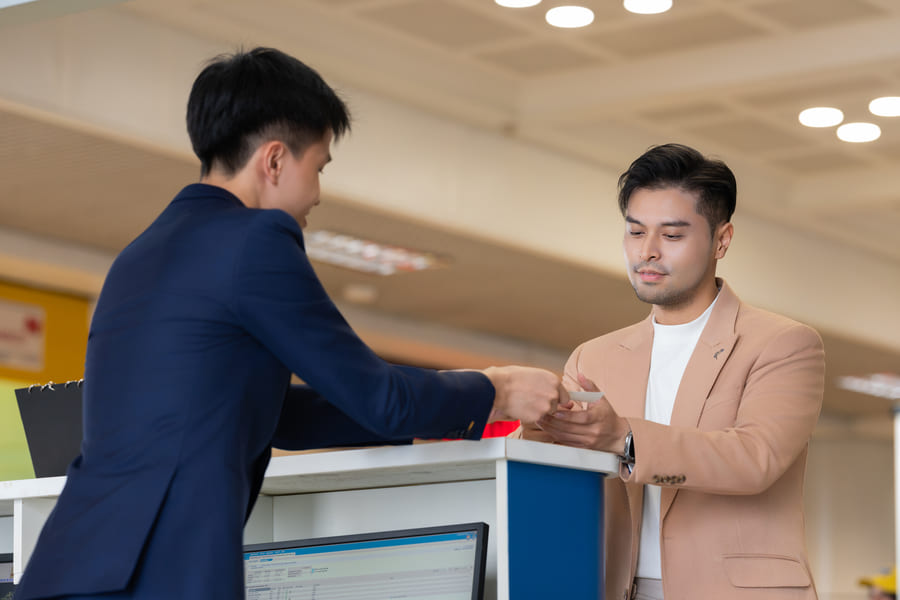
After boarding the aircraft, check the seat number on your boarding pass before sitting down.
If you want to change seats, ask the cabin crew instead of moving to another seat on your own. This is particularly important for seats with specific conditions, such as emergency exit rows or seats assigned to other passengers.
Sitting in the correct seat also helps the process of securing passengers before takeoff proceed more quickly.
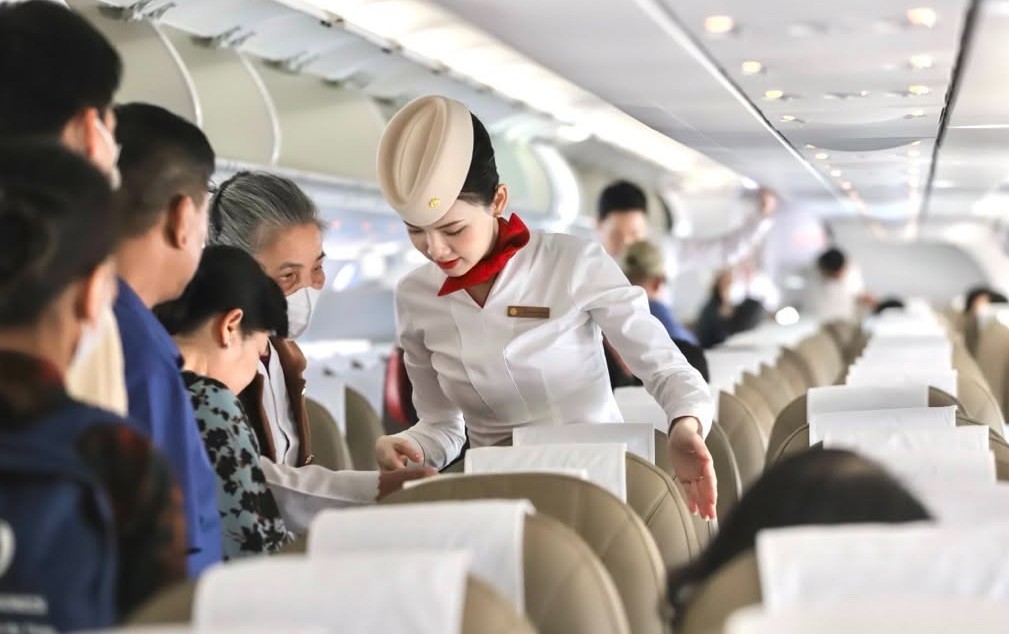
Passengers should sit in the seat number shown on their boarding pass
3.4. Joking About Bombs, Weapons, or Aviation Security
Do not joke about bombs, explosives, weapons, or security threats at the airport or on the aircraft.
Remarks that may seem harmless can cause aviation personnel to handle them as an actual security issue. The Civil Aviation Authority of Vietnam has previously taken action against a passenger who claimed that there was a grenade in their carry-on baggage.
3.5. Touching Flight Attendants Without Authorization
Do not pull a flight attendant's arm, touch them, or try to get their attention by touching them.
If you need assistance, use the call button or wait until a flight attendant passes by. Harassing, threatening, or interfering with a crew member while they are performing their duties may become a security or safety issue.
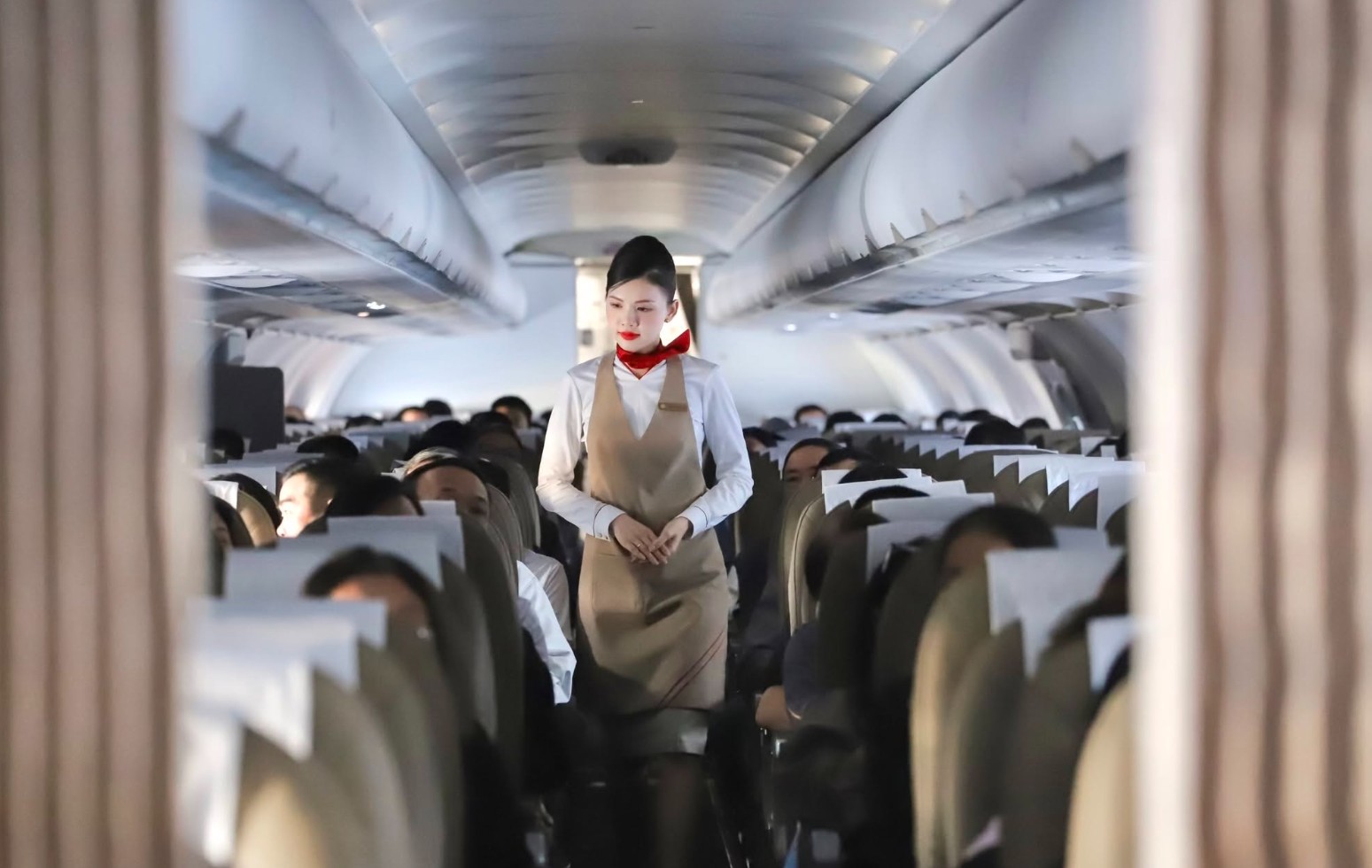
Do not touch flight attendants without authorization; press the call button when you need assistance
3.6. Requesting Service While the Cabin Crew Is Preparing for Takeoff
When passengers have just boarded, the cabin crew usually still needs to complete many tasks before the doors are closed and the aircraft takes off.
If your request is not urgent, wait until the preparation process is complete. If you need assistance due to a health issue, a young child, or a special situation, inform the cabin crew proactively.
This helps ensure that you receive assistance at the appropriate time while avoiding interruptions to the cabin crew's safety-related duties.
3.7. Complaining About the Meal in a Way That Affects Others
You are welcome to provide feedback if the meal or service does not meet your expectations. However, you should speak directly and politely with the flight attendant rather than complaining loudly in the cabin.
If you do not like the meal, you can ask whether other options are available on the flight. Do not turn a service issue into an argument with the cabin crew or other passengers.
3.8. Ignoring Cabin Indicator Lights
When the seat belt sign is illuminated, return to your seat and fasten your seat belt as instructed. Even when the light is off, IATA and FAA recommend that passengers continue wearing their seat belts while seated because turbulence can occur unexpectedly.
Do not stand up simply because the flight has just stabilized if the cabin crew still requires passengers to remain seated.
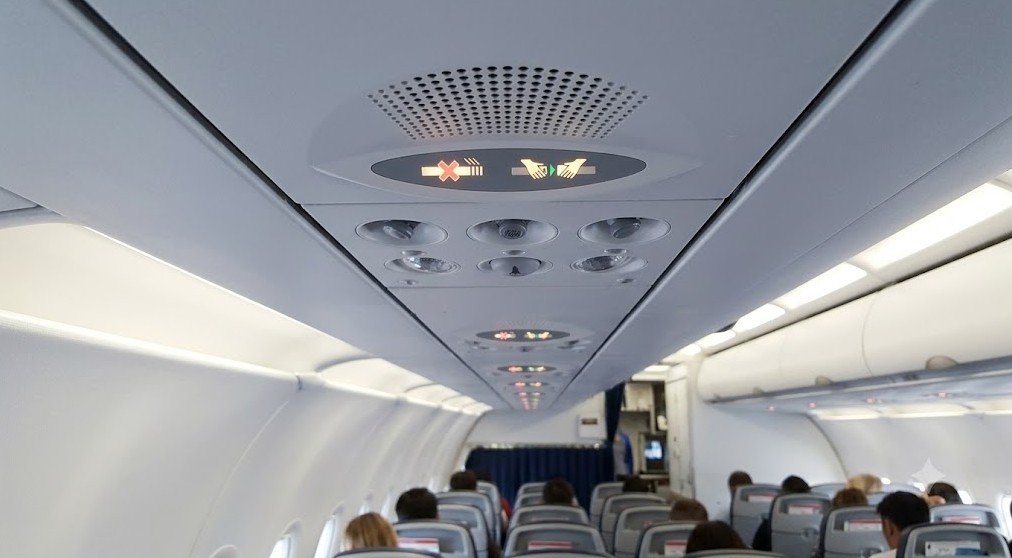
Passengers should keep their seat belts fastened throughout the flight
3.9. Choosing Clothing That Causes Inconvenience to Yourself and Others
There is no single dress standard that applies to every passenger on every flight. However, neat, clean, and travel-appropriate clothing is generally more convenient.
Especially on long-haul flights, you should consider:
Comfortable clothing.
Shoes that are easy to remove and put on.
Clothing that does not interfere with the use of the seat belt.
A light jacket if the cabin temperature is low.
3.10. Walking Barefoot in the Cabin
You should not walk barefoot in the cabin, especially when going to the restroom or through crowded areas.
Wearing shoes or slippers helps protect your feet and makes it easier to move quickly when instructed by the cabin crew.
3.11. Eating Too Much Food That Causes Bloating or Discomfort
Some passengers may feel uncomfortable after eating too much or consuming foods that can cause bloating before or during a flight.
If you have a sensitive stomach, choose moderate portions, drink enough water, and limit foods that tend to make you feel bloated.
This is a recommendation for comfort, not a general prohibition applicable to all passengers.
3.12. Putting Your Feet on Another Person's Seat or Armrest
Armrests and seats are shared spaces for passengers. Putting your feet on another person's seat, armrest, or seat area is unhygienic and may cause discomfort.
Keep your feet within your own seating area and use the footwell for its intended purpose.
The Civil Aviation Authority of Vietnam also advises passengers not to place their knees, feet, or carry-on baggage in the aisle, as this may cause collisions with service carts and increase the risk of cabin crew tripping.
3.13. Pressing the Call Button When It Is Not Really Necessary
The cabin crew call button should be used when you genuinely need assistance.
You may press the call button when:
You need medical assistance or are experiencing a health issue.
You need assistance in an unusual situation.
There is an issue related to your seat or safety.
You need assistance with a young child or a passenger requiring special assistance.
If you simply want to ask a non-urgent question, you can wait until a flight attendant passes by and speak with them.
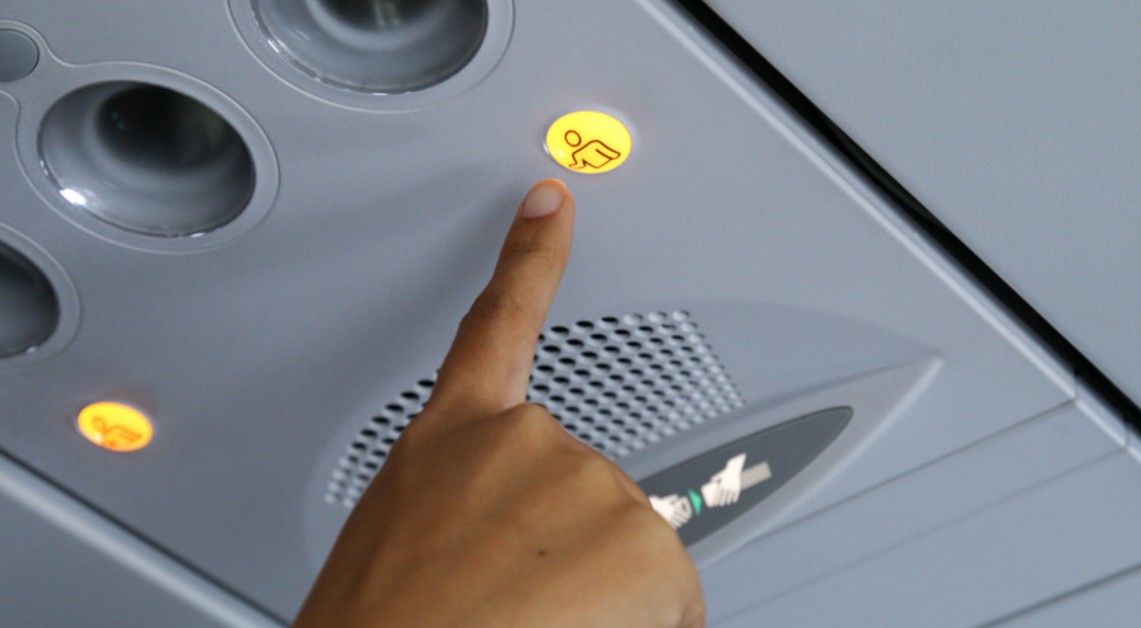
Only press the cabin crew call button when necessary
3.14. Storing Baggage in the Wrong Place
Carry-on baggage should be stored in the appropriate location according to the cabin crew's instructions, usually in the overhead compartment or under the seat in front of you when appropriate.
You should not:
Place a suitcase in the aisle.
Place a bag in front of an emergency exit.
Place items that could fall from the overhead compartment.
Force additional baggage into an already full overhead compartment.
Keep your baggage with you when the cabin crew instructs you to stow it away.
In an evacuation, passengers must not stop to retrieve their baggage. The FAA emphasizes that taking baggage during an evacuation can slow the flow of people and obstruct the aisle or evacuation slide.
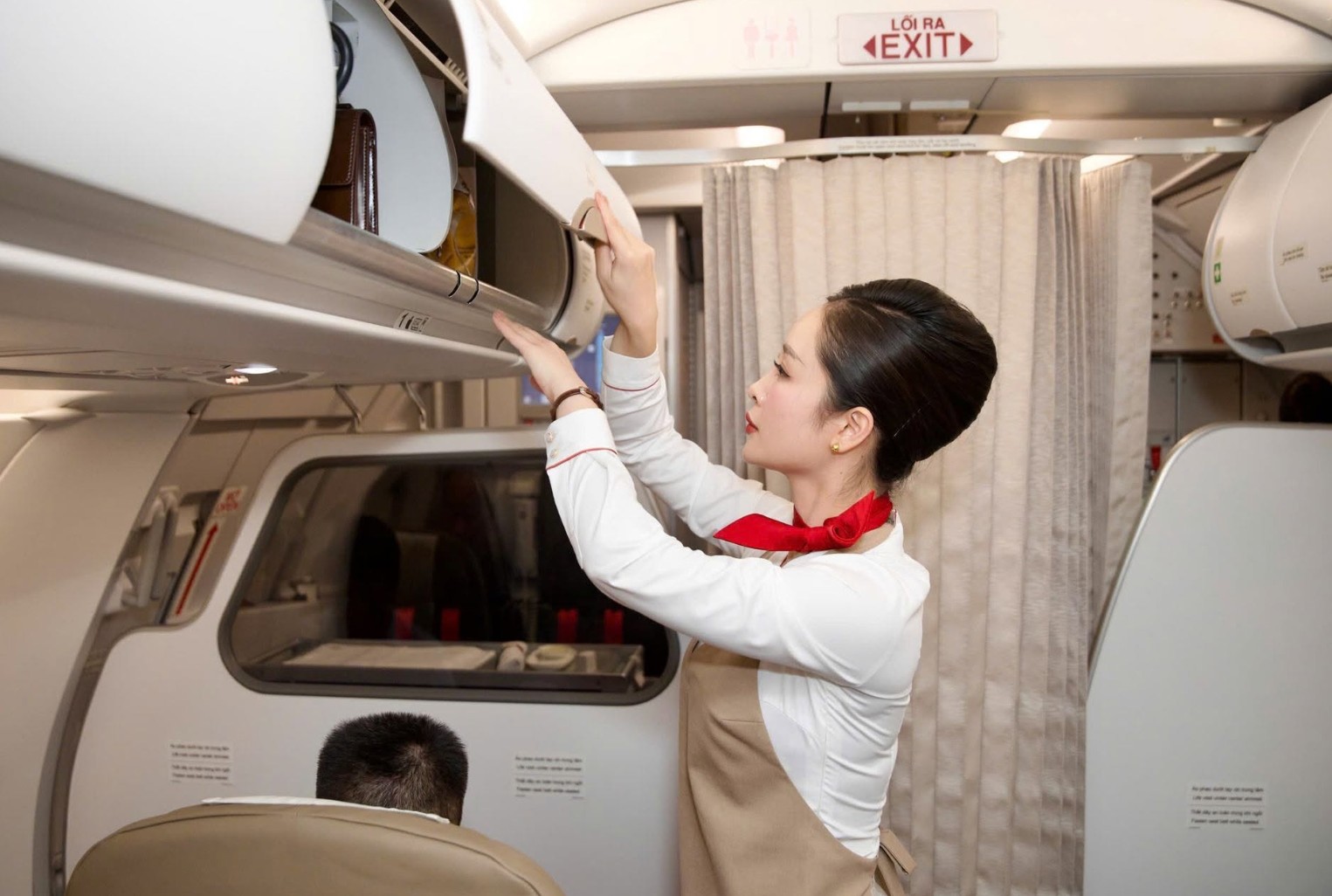
Keep baggage in the designated place and follow the cabin crew's instructions
4. Frequently Asked Questions
4.1. Can You Use Your Phone on an Airplane?
Yes, but you must comply with the airline's policy and the cabin crew's instructions. Phones are generally used in airplane mode or with a connection mode permitted by the airline.
4.2. Can You Use the Restroom While the Airplane Is in Flight?
Yes, when safety conditions allow and the seat belt sign is off. When the cabin crew instructs passengers to remain seated, you must return to your seat and fasten your seat belt.
4.3. Can You Recline Your Seat on an Airplane?
Yes, if the seat has a reclining function and the cabin crew does not require it to remain upright. During takeoff and landing, passengers must follow the cabin crew's instructions.
4.4. Can You Bring Food onto an Airplane?
It depends on the type of food and the airline's regulations. Certain foods, liquids, or items may be subject to specific transportation conditions, so check before your flight.
4.5. Can You Bring a Power Bank onto an Airplane?
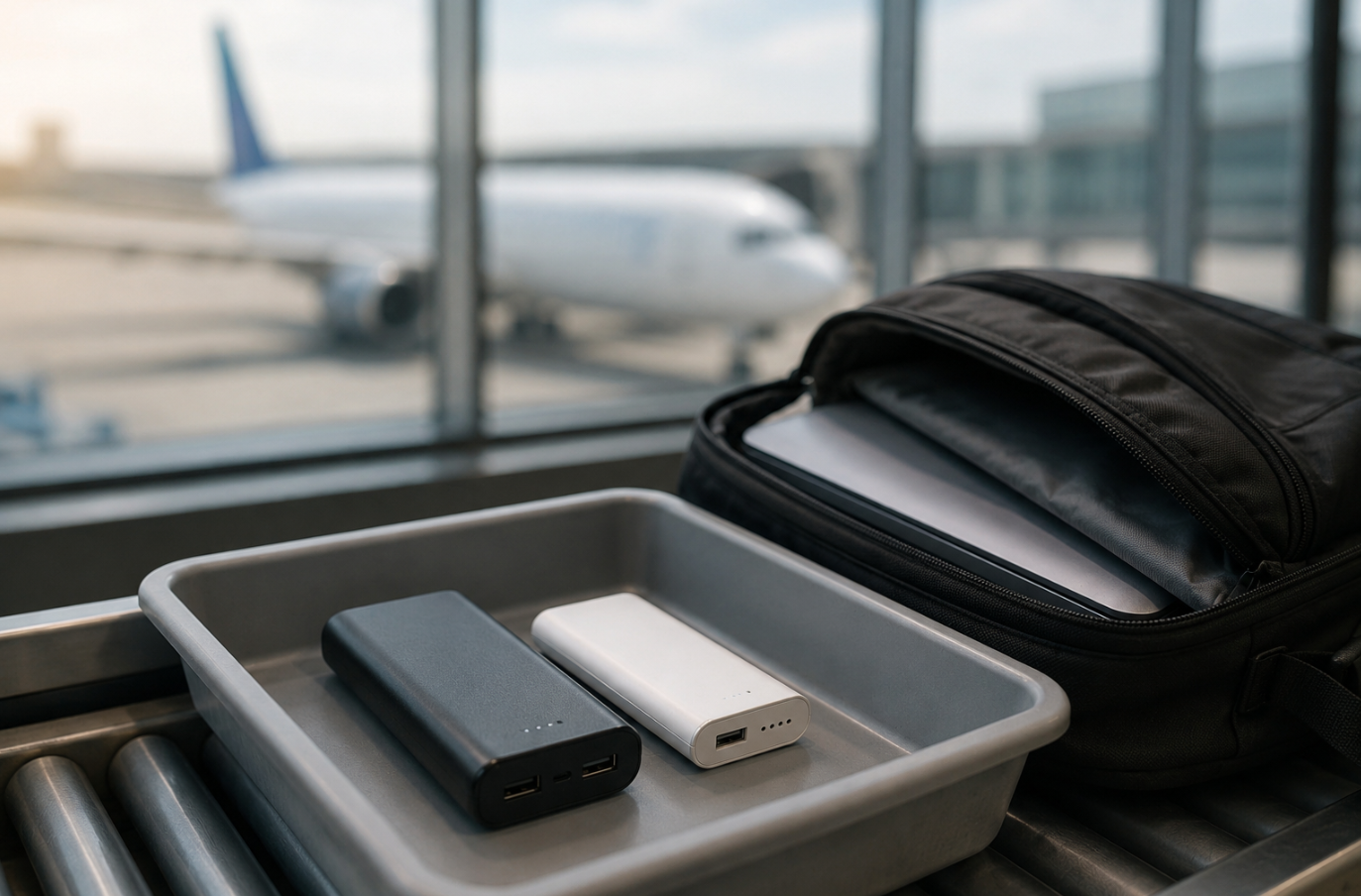
Yes, but you must comply with current regulations on lithium batteries and power banks. In Vietnam, from July 1, 2026, the Civil Aviation Authority of Vietnam requires each passenger to carry no more than 2 power banks, which must be transported in carry-on baggage.
4.6. Can You Use an Electronic Cigarette on an Airplane?
No. IATA advises against smoking or vaping in any area of the aircraft; the airline's specific regulations must be followed.
4.7. Can You Change Seats on an Airplane Without Permission?
You should not move to another seat without authorization. If you want to change seats, ask the cabin crew whether the seat may be used.
Specific regulations may vary depending on the airline, aircraft type, and itinerary. Before your flight, passengers should check the airline's official information, particularly regarding electronic devices, baggage, restricted items, and safety requirements.